Sports Injury Physiotherapy on the Gold Coast
Rolled ankle, pulled calf, a shoulder that won’t cope with training, or an ache that’s been building for a season. Assessment, treatment and a plan that gets you back to playing — not just resting until it settles.
Why athletes book with us
- Physio and podiatry under one roof
- No GP referral required
- Early and after-hours appointments
- A return-to-sport plan, not just treatment
- FREE on-site parking behind the clinic
Getting back is the actual goal
Most sports injuries settle down with time off. The problem is what happens next: you go back at the level you left, the tissue hasn’t been rebuilt to cope, and you’re back where you started a fortnight later.
A proper rehab plan does two things. It settles the current injury, and it rebuilds the strength and load tolerance that stops it recurring — then progresses you back to training and competition at a rate your body is ready for.
Having podiatrists and physiotherapists in the same clinic matters more for lower limb injuries than it sounds. Achilles problems, shin pain, knee pain and recurring ankle sprains are frequently influenced by how the foot meets the ground and what your footwear is doing.
We assess across both disciplines, so you get the whole chain looked at the first time instead of being sent somewhere else a month later.
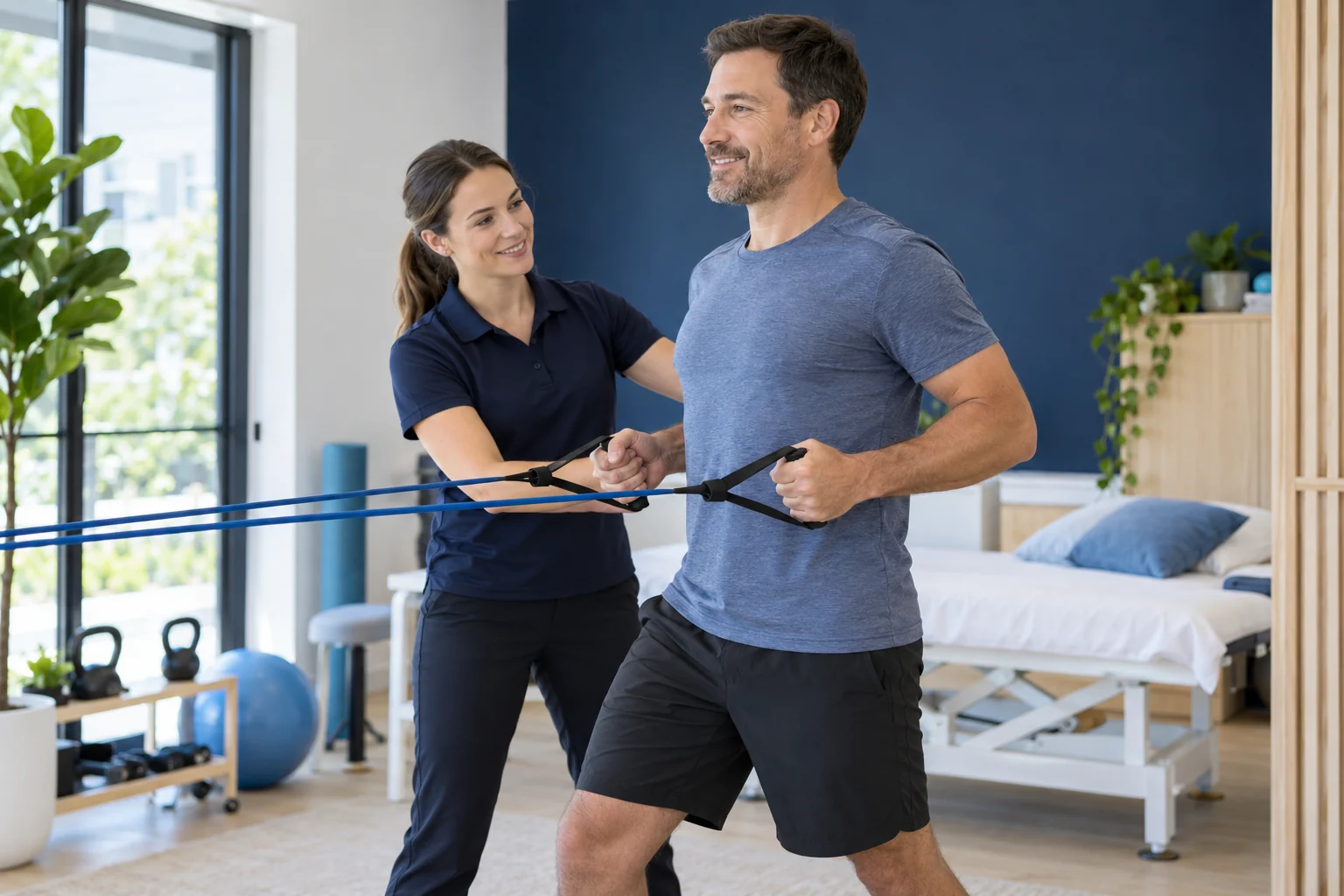
Common sports injuries
Assessment and treatment are always tailored to your presentation. The notes below are a general guide.
Ankle sprains
The most common sporting injury there is, and the one most often under-rehabilitated. Early treatment focuses on settling swelling and restoring movement; the part that matters most is the balance, strength and change-of-direction work that follows, because a poorly rehabilitated first sprain is the strongest predictor of the next one. See also ankle pain.
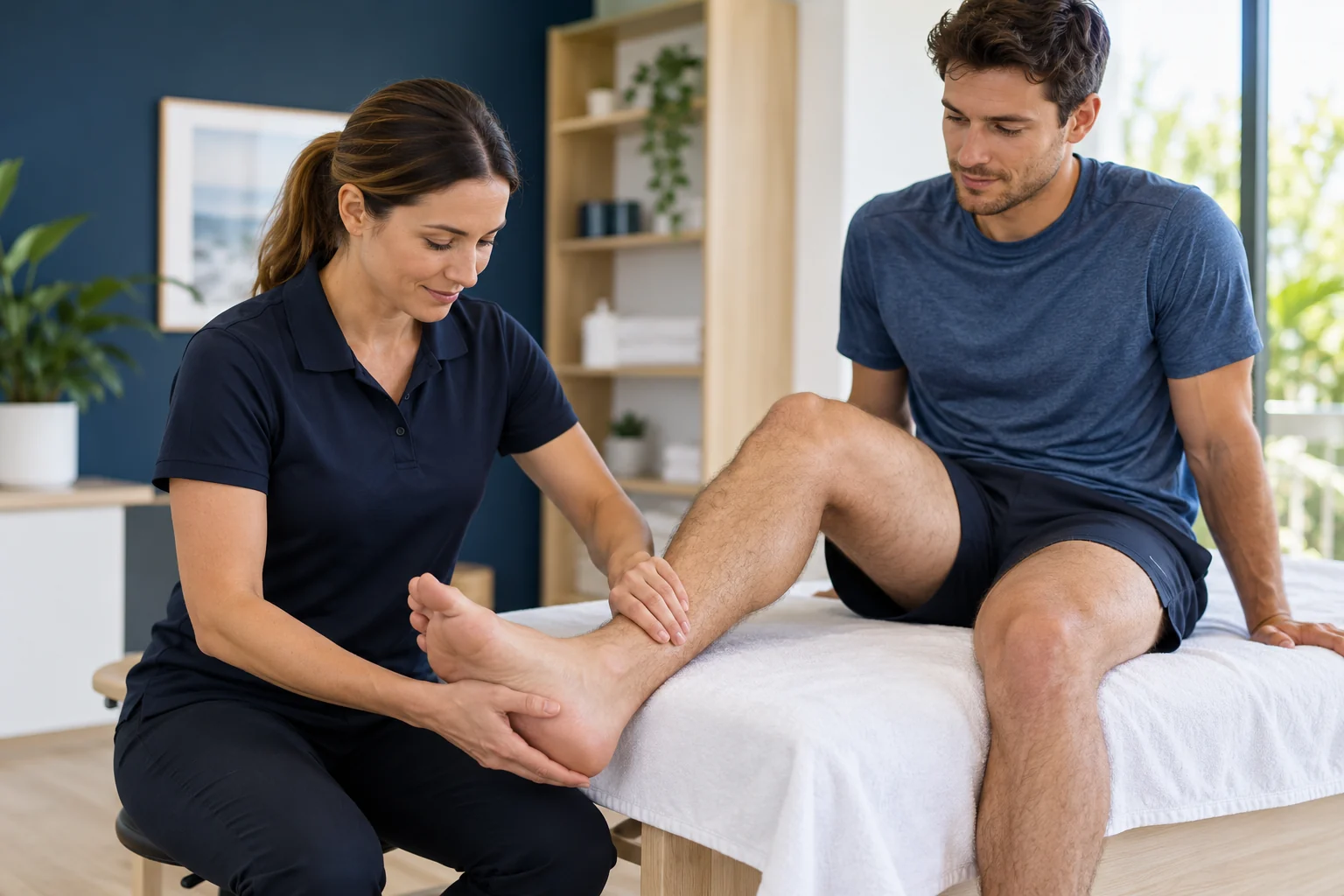
Calf and hamstring strains
Common in sports with sprinting and sudden acceleration. Treatment centres on progressive loading, restoring strength at length, and a graded running program. Returning on feel alone is how most people re-tear, so we use criteria rather than a date on the calendar.
Achilles and shin pain
Achilles tendinopathy and shin pain usually follow a spike in training load, a change in surface or a change in footwear. Tendons adapt slowly, so the plan is a progressive loading program alongside a look at your training history, your calf strength and how your foot is loading.
Knee pain in runners and field athletes
Runner’s knee, patellar tendinopathy and the ache that arrives at a predictable distance. Assessment looks at hip and thigh strength, running load and foot mechanics together. More on knee pain.
Shoulder injuries
Rotator cuff irritation from gym work, swimming and throwing sports, AC joint injuries from contact, and shoulders that have lost confidence after a dislocation. Treatment combines hands-on work where it helps with graded loading of the cuff and shoulder blade muscles.
Back injuries
Lower back pain from lifting, rowing, rotation sports and long sessions in the same position. We assess movement, strength and how you’re loading, then treat with manual therapy, exercise and technique work aimed at what’s actually driving it.
From injury to back on the field
Diagnose it
History, clinical testing and a view on what’s injured and how badly — plus whether imaging or a medical opinion is warranted.
Settle it
Hands-on treatment, load management and dry needling where clinically appropriate and agreed with you, to calm symptoms early.
Rebuild it
Progressive strength and load work aimed at the capacity your sport actually demands, not generic exercises.
Return to sport
Criteria-based progression through running, change of direction and contact or competition, so you go back when you’re ready.
If your injury would be better served by a scan, a sports physician or a surgical opinion, we’ll tell you and help you get there rather than treating around it.
Sports injury FAQs
How soon should I come in after an injury?
Early is better. Getting an accurate diagnosis in the first few days tells you what you’re dealing with, avoids a fortnight of unnecessary rest, and gets the rehab started at the right time. If you can’t weight-bear at all, the joint looks deformed, or there’s significant numbness, go to your GP or an emergency department first.
Can I keep training?
Usually in some form. Complete rest is rarely the right answer for musculoskeletal injuries, and it costs you fitness you then have to rebuild. We normally modify what you’re doing rather than stop it. Tell us what you train and what you’re working towards.
Do I need a scan?
Often not. Most sporting injuries are diagnosed clinically, and scans frequently show changes that are present in people without symptoms. Where a scan would genuinely change the plan — a suspected fracture or significant tear, for example — we’ll organise the referral.
How long until I’m back?
It depends on the tissue and the severity, and anyone who gives you a number before assessing you is guessing. What we will give you is an honest estimate after the first appointment, the criteria you need to meet along the way, and regular reassessment so you can see progress.
Do you treat work injuries and WorkCover?
Yes. Bring your claim details to the first appointment and reception will let you know what’s needed. Call us beforehand on 07 5571 7329 if you’d like to check how it works.
Do I need a referral, and can I claim?
No referral needed. We process private health rebates on the spot according to your policy, and current prices are on our fees page.
Hip to Toe, Arundel
138 Olsen Avenue, Arundel
Gold Coast, QLD 4214
Near the corner of Central Street, between Harbour Town and the Gold Coast University Hospital.
Phone: 07 5571 7329
Email: reception@hiptotoe.com.au
Getting here
FREE on-site parking in the car park behind the clinic, plus free street parking out the front.
Ramped entrances, a disability parking bay and an accessible bathroom. If you’d like a hand getting in, call ahead and we’ll make sure someone can meet you.
Get assessed and get back to it
Physio and podiatry in one clinic, no referral needed, and a plan aimed at returning to your sport rather than avoiding it.
See also: physiotherapy, men’s health and foot mobilisation.