Routine Podiatry on the Gold Coast
Nails, hard skin, corns, cracked heels and the everyday foot care that makes walking comfortable again. Most of it is dealt with in the appointment itself.
What to expect
- Assessment and treatment in the same appointment
- No GP referral required
- Nail surgery available under local anaesthetic
- Health fund rebates claimed on the spot
- FREE on-site parking behind the clinic
Podiatry and physio together
Both in the one clinic — and we move you across if the other one is the better fit.
No referral needed
Book straight in. Medicare care plans, DVA and NDIS patients welcome.
Health fund rebates on the spot
HICAPS in the clinic — claim as you pay and only settle the gap.
FREE on-site parking
Car park behind the clinic on Olsen Avenue, Arundel, plus free street parking.
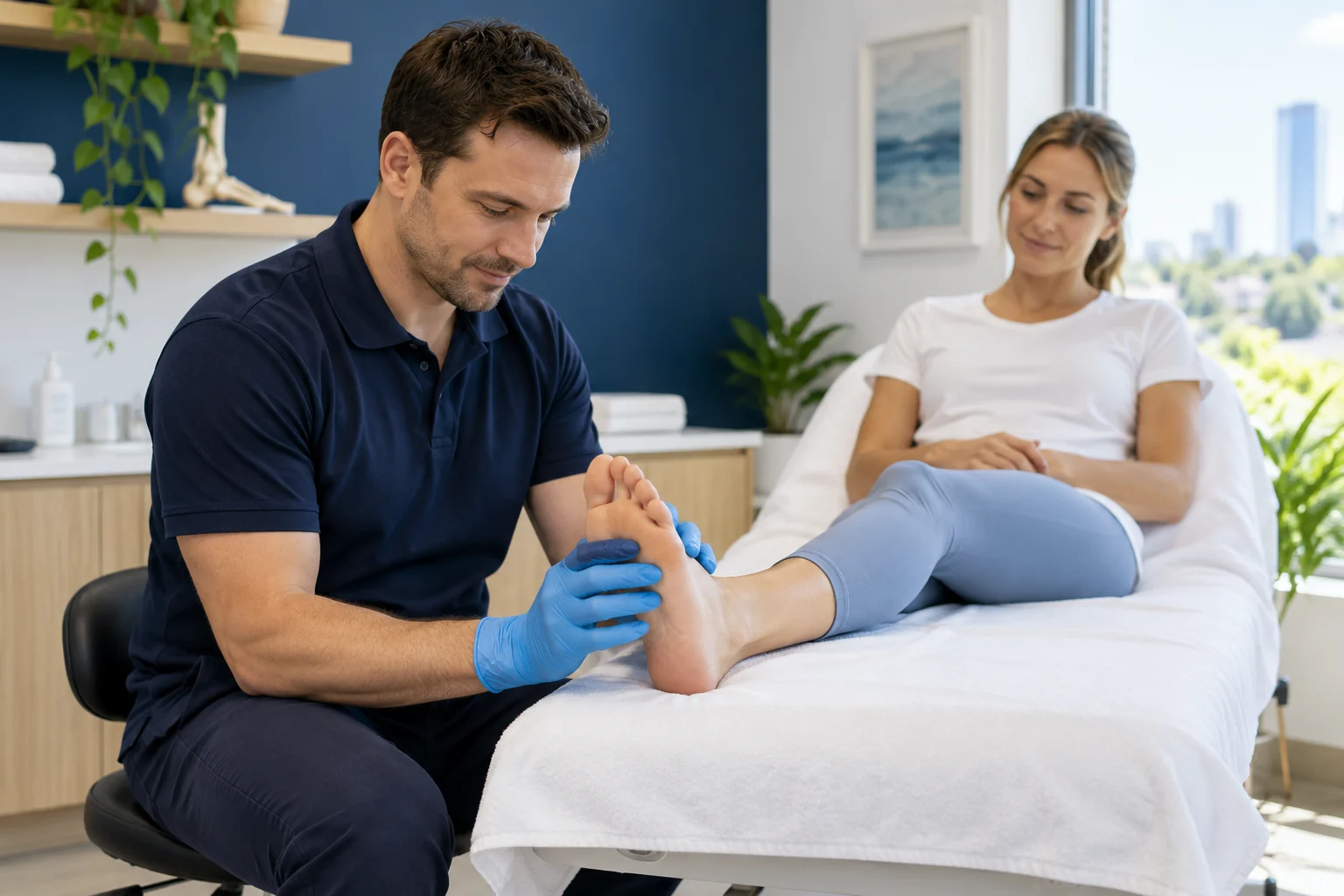
The everyday foot care that makes a real difference
Routine podiatry is the assessment and management of common foot, skin and nail problems — the ones that aren’t dramatic, but that make every step uncomfortable and quietly stop you doing things.
Our podiatrists treat these every day. Most of what we see is sorted in a single appointment, and you’ll usually walk out noticeably more comfortable than you walked in.
It also matters more than people think. Hard skin that keeps rebuilding, a nail that keeps digging in or a heel that keeps splitting are mechanical messages worth listening to — and in people with diabetes or reduced circulation, small foot problems deserve early attention.
You can book directly. No referral needed.
What we assess and manage
Toenails that hurt, thicken or keep digging in
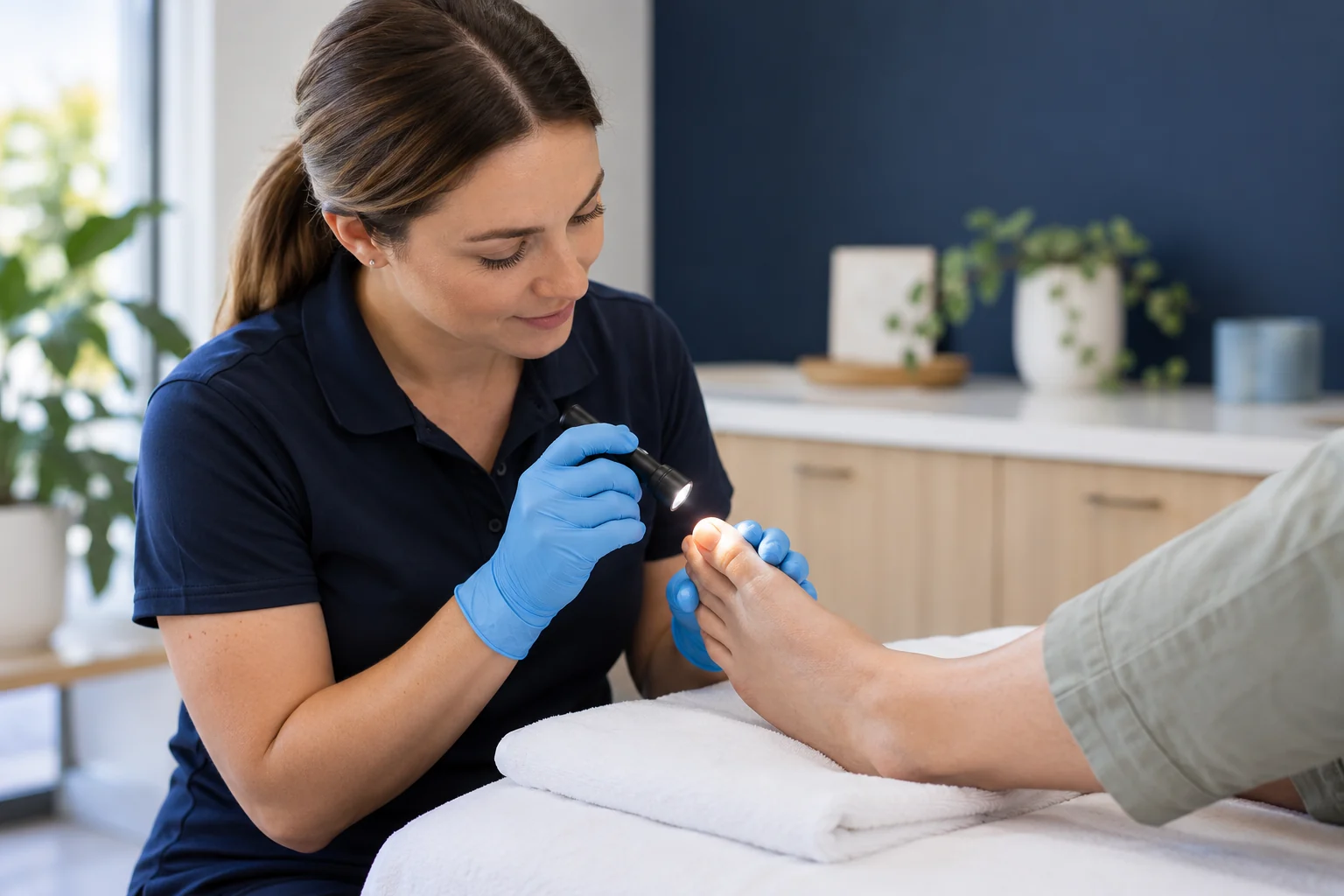
Nails thicken, discolour, curve into the skin or become too difficult to cut safely at home. Some of that is mechanical, some is fungal, and some follows an old injury — and the treatment differs, which is why it’s worth having assessed rather than guessed at.
Cutting, thinning and tidying thickened nails is one of the most common things we do, and for many people it’s a regular appointment that simply keeps them comfortable.
Ingrown toenails
Where the nail edge grows into the skin beside it, causing pain, swelling and sometimes infection. In many cases the offending edge is removed at your first appointment, with immediate relief. Where it keeps returning, minor nail surgery under local anaesthetic treats the edge so it stops regrowing into the skin. Full detail on our ingrown toenail page.
Fungal and thickened nails
Yellow, brittle, thickened or crumbling nails. Not everything that looks fungal is, so where it matters we can arrange pathology testing before committing you to months of treatment. Management may include reducing the nail, topical treatment or a conversation with your GP about tablets. More on our fungal nail page.
Black toenails and nail injuries
Usually from a knock, or from shoes that are too short for running and downhill walking. Assessment checks what’s under the nail, whether the nail will be lost, and whether footwear is the real culprit.
Most of this is sorted in the appointment itself.
Corns, calluses, cracked heels and warts
Skin thickens where it’s loaded repeatedly. A callus is a broad area of hard skin; a corn is a concentrated plug with a core that presses into the tissue underneath, which is why it feels like walking on a stone.
Removing it is painless and the relief is usually immediate. But unless something changes about the pressure that caused it, it rebuilds — so we look at footwear and at how you’re loading the foot, not just at the skin.
Full detail, including how we tell a corn from a plantar wart, is on our corns, calluses and warts page.
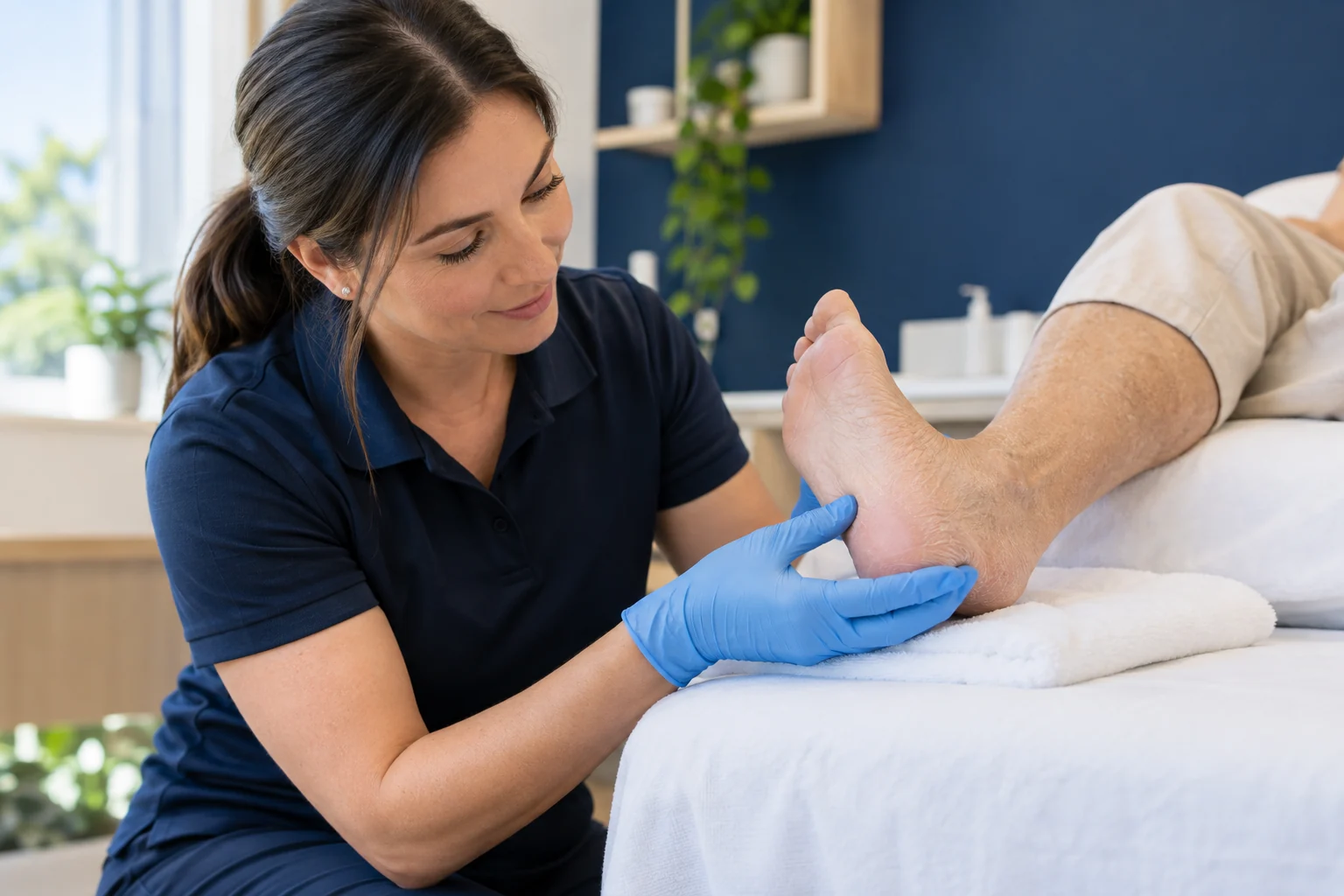
Cracked heels, blisters and tinea
Thickened heel skin that splits is uncomfortable and is a way in for infection. Treatment is reduction of the hard skin, dressing any fissures and a home routine that’s realistic. We also treat blisters and tinea (athlete’s foot), which often sits alongside fungal nails and needs treating at the same time.
Diabetic foot assessments
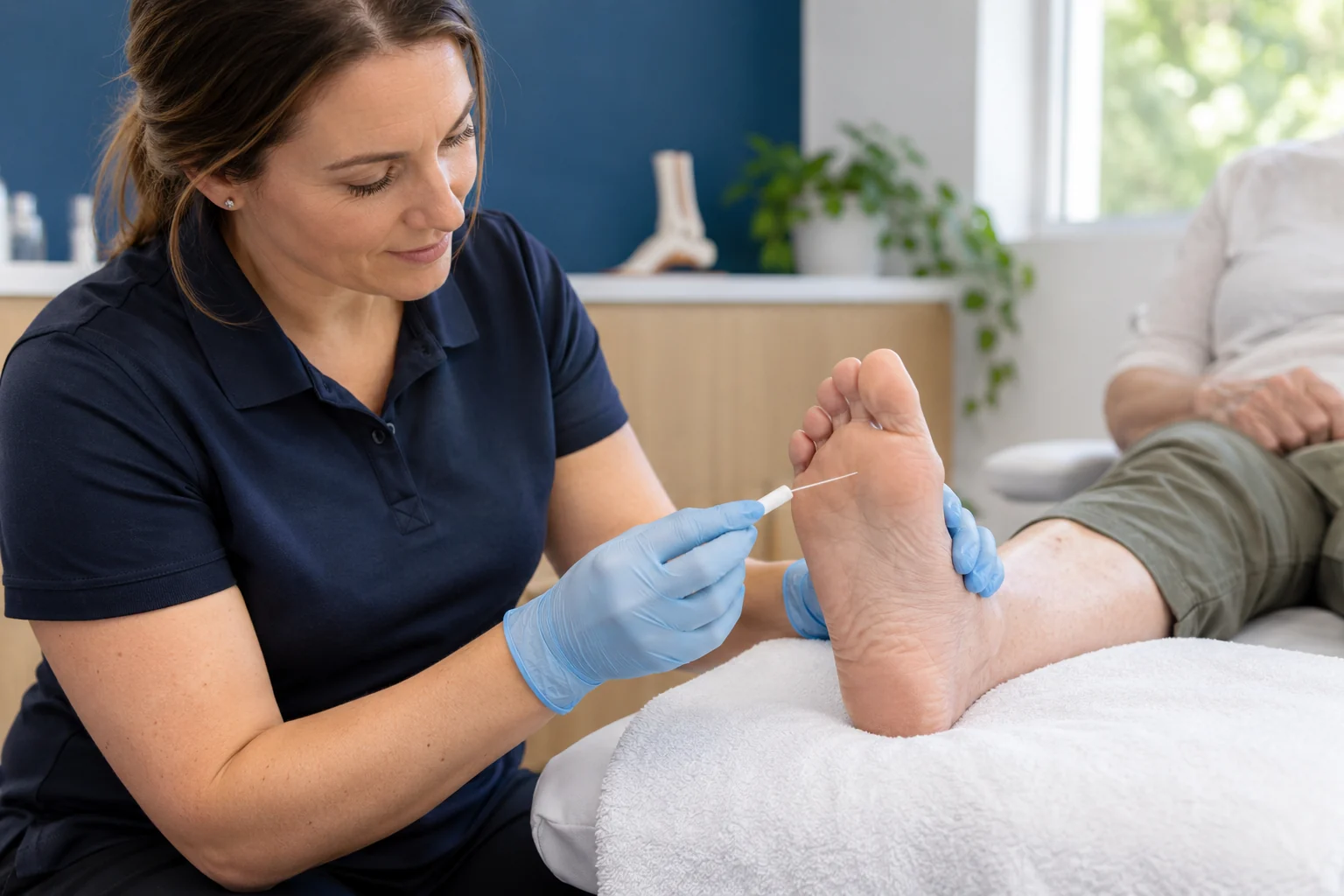
Diabetes can gradually affect the nerves and the blood supply in the feet. When sensation reduces, a blister or a stone in the shoe may not announce itself; when circulation reduces, the same small problem is slower to heal.
A foot check assesses circulation, sensation, skin and nails, and how you’re loading the foot, then sets a review interval that matches your risk. Many people also have their nails and skin maintained here rather than managing it at home.
More on our diabetic foot checks page.
Children’s feet and exercise programs
Children’s podiatry

Heel pain in active kids (Sever’s), knee pain at the shin bone (Osgood-Schlatter), Haglund’s, growing pains, ingrown toenails and children who tire quickly or trip often. Management is built around the child’s age, sport and symptoms — and plenty of children need reassurance rather than treatment. See children’s podiatry.
Podiatry exercises

Where it suits your presentation, an exercise program forms part of the plan — prescribed to your assessment findings and aimed at strength, mobility, balance and how your foot and lower limb function. Your podiatrist will run you through them so you know you’re doing them correctly, and you can also follow along with our exercise videos.
What happens at your appointment
A look and a conversation
What’s bothering you, how long it’s been there, your general health, and what footwear you actually wear.
Treatment on the day
Most routine work — nails, hard skin, corns — is done in the same appointment, and it doesn’t hurt.
Why it happened
Where something keeps coming back, we look at the pressure or mechanics causing it rather than just clearing it again.
A sensible interval
Some people need us once; others settle into a comfortable routine. We’ll give you an honest recommendation, not a subscription.
Nails, hard skin or a sore toe? Book and get it dealt with.
Routine podiatry FAQs
Do I need a referral from my doctor?
No. You can book directly at any time. If you have a chronic health condition, your GP may put you on a Chronic Condition Management Plan (previously called an EPC or Team Care plan), which allows up to five subsidised allied health appointments per calendar year. Bring the paperwork along and we’ll process the rebate in-clinic on the day. We don’t bulk bill, so the gap applies.
Does any of it hurt?
Reducing hard skin, removing a corn and tidying thickened nails are generally painless, because the thickened tissue has no nerve supply. Most people find the appointment relaxing. Where a procedure would be uncomfortable — nail surgery, for instance — local anaesthetic is used and your podiatrist explains it beforehand.
How often should I come?
It depends on how quickly skin and nails build back up, which varies a lot. Many people settle into every six to twelve weeks; others come rarely once footwear or loading has been addressed. If you have diabetes or reduced circulation, your podiatrist will recommend an interval based on your risk.
Can you see my child?
Yes. We assess and manage a range of children’s foot and lower limb concerns, and a parent or guardian stays in the room throughout. See our children’s podiatry page.
Can I claim on my private health fund?
Yes. We process private health rebates on the spot in accordance with your provider and policy. Current fees are on our fees page, and reception can check your rebate if you call with your card handy.
Hip to Toe, Arundel
138 Olsen Avenue, Arundel
Gold Coast, QLD 4214
Near the corner of Central Street, between Harbour Town and the Gold Coast University Hospital.
Phone: 07 5571 7329
Email: reception@hiptotoe.com.au
Getting here
FREE on-site parking in the car park behind the clinic, plus free street parking out the front.
Ramped entrances, a disability parking bay and an accessible bathroom. If you’d like a hand getting in, call ahead and we’ll make sure someone can meet you.
Book your podiatry appointment
Most routine work is done on the day, no referral needed, with free parking out the back.