Diabetic Foot Checks on the Gold Coast
If you have diabetes, an annual foot check is one of the more worthwhile half-hours you can spend. We assess circulation, sensation and skin, and tell you plainly what your feet need — and what they don’t.
What to expect
- A thorough assessment, not a quick look
- Circulation and sensation testing
- A written summary you can share with your GP
- Medicare care plans accepted
- FREE on-site parking behind the clinic
Small problems get missed when feeling changes
Diabetes can gradually affect both the nerves and the blood supply in the feet. When sensation reduces, a blister, a stone in the shoe or a small cut may not announce itself the way it used to. When circulation reduces, the same small problem is slower to heal.
That combination is why foot checks are recommended for people with diabetes even when nothing hurts and everything looks fine. The point is to catch changes early, while they’re still simple to deal with.
Current Australian guidance recommends that people with diabetes have their feet assessed at least annually, and more often where risk is higher. Your GP may already have mentioned it as part of your annual cycle of care.
Most people walk out of the appointment reassured, with a clear idea of their own risk level and a few practical things to do at home. If something does need attention, you find out at a stage where there are options.
What the check involves
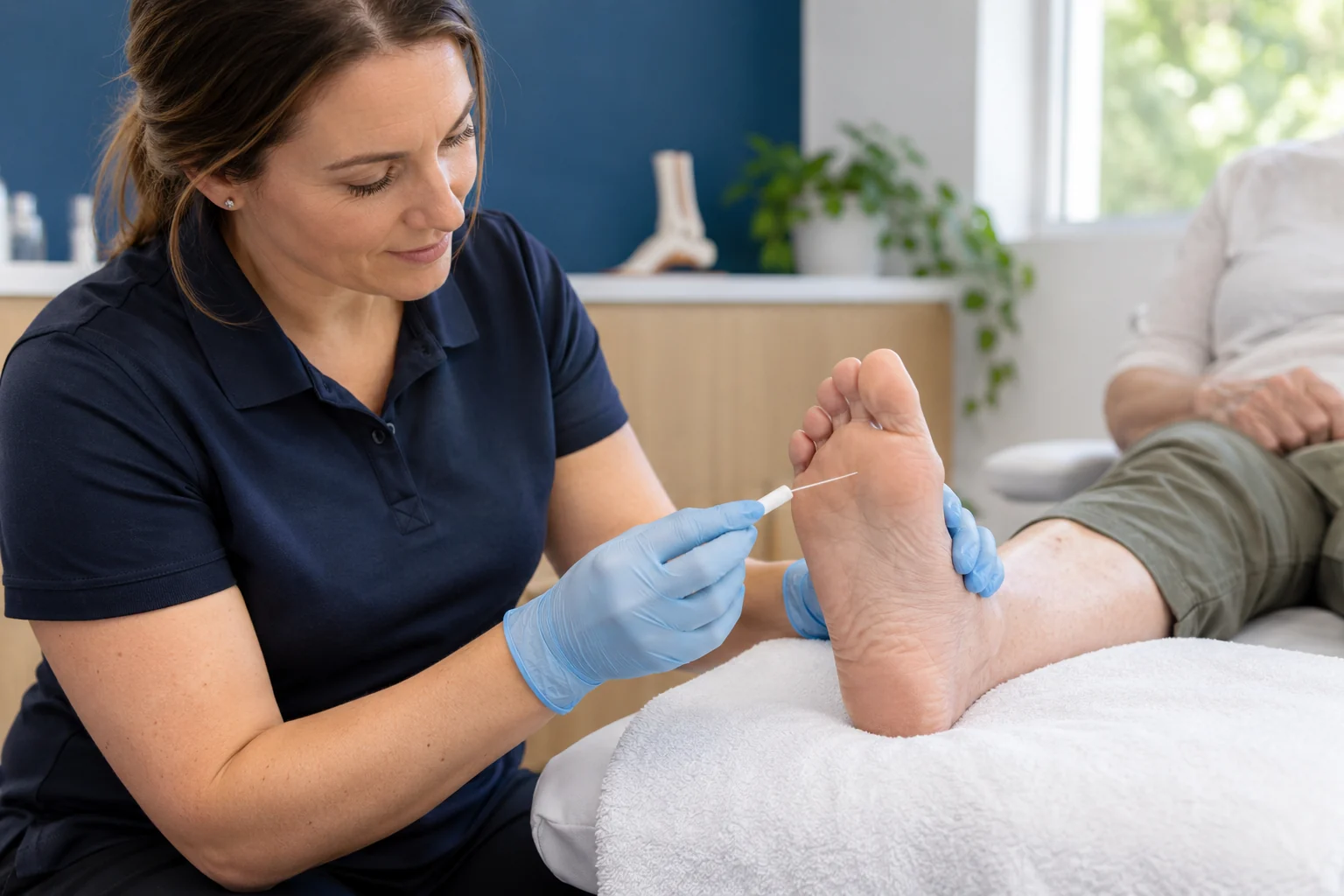
Nothing in it is uncomfortable, and we explain each part as we go.
Circulation
We check the pulses in your feet and may use a doppler to listen to the blood flow, along with looking at skin colour, temperature and how the skin and nails are faring.
Sensation
Simple, painless tests using a fine filament and a tuning fork to map how well the nerves in your feet are detecting pressure and vibration.
Skin, nails and pressure
A check for callus, cracks, nail problems and pressure areas, plus a look at your footwear and how you’re loading the foot — where many problems start.
You’ll finish with a clear explanation of your risk level, what to watch for at home, how often to come back, and a summary you can give your GP or diabetes educator.
Call us, or your GP, straight away if you notice
Get seen urgently
- A break in the skin, ulcer or wound on the foot that isn’t healing
- Redness, heat, swelling or an unusual smell
- A sudden change in colour, especially darkening of a toe
- New numbness, burning or pins and needles
- Pain in the feet or calves when walking that eases with rest
None of these mean something dreadful is happening, but all of them are worth looking at promptly rather than next month. Foot problems in diabetes do better the earlier they’re dealt with.
Call reception on 07 5571 7329, say that you have diabetes and describe what you’ve noticed, and we’ll fit you in as soon as we can. If it’s urgent and we can’t see you quickly enough, we’ll tell you to see your GP or present to hospital rather than wait.
Routine foot care if you have diabetes
Many people with diabetes have their nails and skin maintained by a podiatrist rather than doing it themselves, particularly where reaching the feet is awkward, eyesight has changed, or sensation is reduced. It removes the main cause of self-inflicted injuries.
We’ll also go through footwear, moisturising, checking your own feet daily, and what to do if you spot something. If you need a more frequent review because of your risk level, we’ll say so and explain why. See our routine podiatry page for what else is covered.
Diabetic foot check FAQs
How often should I have my feet checked?
At least once a year for most people with diabetes, and more often where the assessment shows reduced circulation or sensation, a foot shape that concentrates pressure, or a history of ulcers. Your podiatrist will recommend an interval based on what they find rather than a standard package.
Can I use my Medicare care plan?
Often yes. A GP Chronic Condition Management Plan allows up to five subsidised allied health appointments per calendar year, and podiatry for diabetes is one of the common uses. Bring the paperwork to your appointment and we’ll process the rebate in-clinic on the day. We don’t bulk bill, so the gap applies.
My feet feel fine. Is it still worth it?
That’s rather the point. The changes diabetes causes in the feet develop quietly, and reduced sensation in particular is something people usually don’t notice themselves. A check gives you a baseline to compare against next year.
Do I need a referral?
No. You can book directly any time. We’re also happy to work with your GP, diabetes educator or endocrinologist and send through our findings.
How long does it take?
Allow a standard appointment for the assessment itself. If you’d also like your nails and skin attended to on the day, mention it when you book so we can allow enough time.
Hip to Toe, Arundel
138 Olsen Avenue, Arundel
Gold Coast, QLD 4214
Near the corner of Central Street, between Harbour Town and the Gold Coast University Hospital.
Phone: 07 5571 7329
Email: reception@hiptotoe.com.au
Getting here
FREE on-site parking in the car park behind the clinic, plus free street parking out the front.
Ramped entrances, a disability parking bay and an accessible bathroom. If you’d like a hand getting in, call ahead and we’ll make sure someone can meet you.
Book your diabetic foot check
A proper assessment, a clear explanation of your risk, and a plan that fits how your feet actually are.