Children’s Podiatry on the Gold Coast
Sore heels after footy training, a child who trips a lot or asks to be carried, feet that look different to everyone else’s. We’ll tell you honestly whether it needs treating or whether it’s just how growing feet are.
For parents
- You stay in the room the whole time
- No GP referral required
- Plain answers, not a treatment plan by default
- Health fund rebates claimed on the spot
- FREE on-site parking behind the clinic
A lot of what worries parents is normal
Children’s feet change enormously between toddling and the teenage years. Flat-looking arches, feet that turn in or out, and a walking style that looks odd to an adult eye are often normal stages rather than problems, and many settle on their own as children grow.
So the first job of an appointment is working out which category you’re in. If your child’s feet are developing normally, we’ll say so, explain what to expect next, and not sell you anything.
What does deserve attention is pain. Children aren’t supposed to have sore feet, and “growing pains” is not an explanation for a child who limps, avoids sport, or wakes at night with pain.
Also worth assessing: a sudden change in walking, one foot behaving differently to the other, a child falling well behind their peers in activity, or a parent who’s simply worried and wants a professional set of eyes on it.
Common reasons for a visit
Assessment and treatment are always tailored to the individual child — the notes below are a general guide.
Heel pain in active kids (Sever’s)
Very common between roughly eight and fourteen, especially in children playing multiple sports on hard surfaces. The growth plate at the back of the heel becomes irritated by load. It typically hurts during and after sport, and settles with rest. Management usually involves adjusting training load, footwear and cushioning, stretching and strengthening, and patience while the growth plate matures.
Knee pain at the shin bone (Osgood-Schlatter)
The same idea at the knee — a tender, sometimes prominent bump below the kneecap in growing, sporty children. We look at load, strength and how the foot and hip are working, and build a plan that keeps them playing where possible rather than stopping everything.
Flat feet and arch concerns
Most children have flat-looking feet early on, and the arch commonly develops through childhood. Assessment looks at whether the foot is flexible, whether it hurts, whether it’s affecting activity, and whether both sides match. Where it’s symptomatic we treat; where it isn’t, we usually monitor.
Tripping, fatigue and “can you carry me?”
Children who tire quickly on family walks, trip frequently, or avoid activities their friends enjoy are worth assessing. Sometimes there’s a mechanical reason we can address; sometimes it points somewhere else and we’ll say so and suggest who to see.
In-toeing, out-toeing and toe walking
Common in young children and often self-resolving. Assessment establishes where the rotation is coming from, whether it’s within the normal range for your child’s age, and whether anything is warranted. Persistent toe walking is worth having looked at.
Warts, ingrown toenails and skin problems
Plantar warts are extremely common in school-age children, and ingrown toenails turn up a lot in teenagers in tight sports boots. Both are treatable — see warts and skin and ingrown toenails.
What the appointment looks like
A chat first
What you’ve noticed, what your child says, what sport and how much of it, and what shoes they live in.
Watching them move
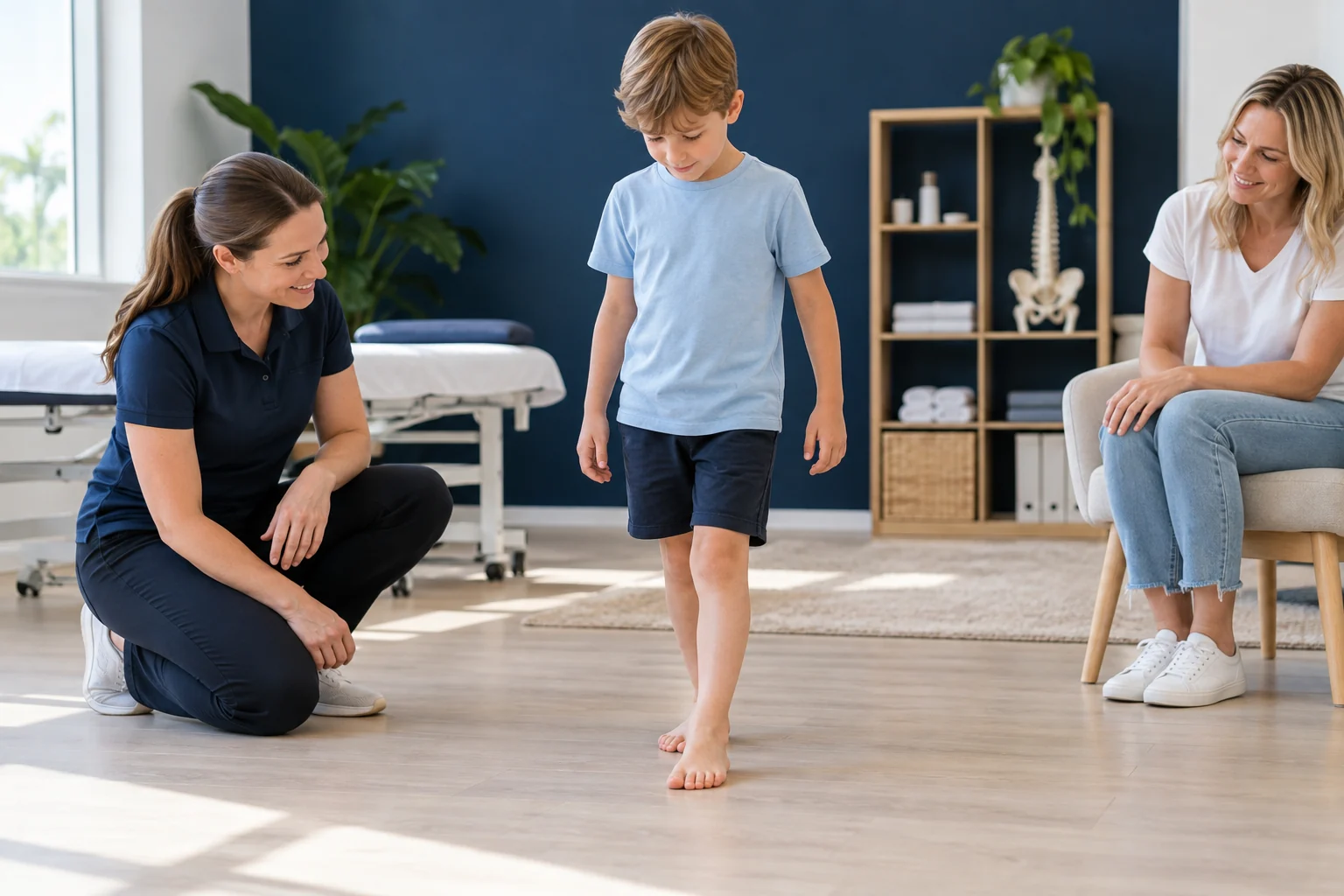
Walking, running, hopping and standing — most of the useful information comes from watching rather than measuring.
A straight answer
Whether this is a normal stage, something to monitor, or something to treat — explained to you and to your child.
A plan if one is needed
Usually load advice, footwear, and exercises that fit around school and sport. We review as they grow.
Parents’ questions
What age can you see children from?
From toddlers upwards. For very young children the appointment is mostly observation and a conversation with you. Call reception and describe what you’ve noticed and we’ll tell you whether an appointment is worthwhile at your child’s age.
Will my child need orthotics?
Often not. Where there’s pain or a clear mechanical driver they can be useful, and we prescribe them when they’re appropriate. But a flat-looking foot that doesn’t hurt usually doesn’t need a device. We’ll tell you which situation your child is in, and what the alternatives are.
Do they have to stop sport?
Usually not entirely. For growth-plate problems like Sever’s we normally modify training load rather than stop everything, because complete rest tends to mean it flares again as soon as they go back. We’ll give you something practical you can take to the coach.
Is it really just growing pains?
Sometimes, but it’s a label rather than a diagnosis. Pain that is one-sided, that causes a limp, that wakes a child at night, or that comes with swelling, redness or feeling unwell should be assessed rather than waited out — see your GP if any of those apply.
What shoes should I buy?
Bring the shoes they actually wear to the appointment, including the school ones and the sports ones. Wear patterns tell us a lot, and advice about the next pair is more useful when we’ve seen the current ones.
Do I need a referral, and can I claim?
No referral needed. We process private health rebates on the spot according to your policy, and current prices are on our fees page.
Hip to Toe, Arundel
138 Olsen Avenue, Arundel
Gold Coast, QLD 4214
Near the corner of Central Street, between Harbour Town and the Gold Coast University Hospital.
Phone: 07 5571 7329
Email: reception@hiptotoe.com.au
Pram-friendly entrance and room in the treatment room for siblings.
Getting here
FREE on-site parking in the car park behind the clinic, plus free street parking out the front.
Ramped entrances, a disability parking bay and an accessible bathroom. If you’d like a hand getting in, call ahead and we’ll make sure someone can meet you.
Book your child an assessment
A straight answer about whether anything needs doing, and a plan that fits around school and sport if it does.