Foot Pain Treatment on the Gold Coast
Arch, forefoot, toes or the ball of the foot — if it hurts to walk, stand at work or train, our podiatrists and physiotherapists will work out why and treat the cause, not just the sore spot.
What to expect
- Assessment and first treatment in the same appointment
- No GP referral required
- Podiatry, physiotherapy and foot mobilisation under one roof
- Health fund rebates claimed on the spot
- FREE on-site parking behind the clinic
Podiatry and physio together
Both in the one clinic — and we move you across if the other one is the better fit.
No referral needed
Book straight in. Medicare care plans, DVA and NDIS patients welcome.
Health fund rebates on the spot
HICAPS in the clinic — claim as you pay and only settle the gap.
FREE on-site parking
Car park behind the clinic on Olsen Avenue, Arundel, plus free street parking.
Twenty-six bones, thirty-three joints, one very busy day
Your foot is not a solid block. It is a set of joints that are meant to move — spreading to absorb load as you land, then stiffening to push off. When part of that sequence stops working properly, the load has to go somewhere else.
That is usually how foot pain starts: not from one dramatic injury, but from a structure quietly taking more than its share, thousands of steps a day, until it complains.
So the question is not only “what hurts” but “why is this bit taking the load”. Joint stiffness, strength, footwear, work surfaces, training changes and what is happening at the ankle, knee and hip all feed into it.
We assess the lot, explain what we find, and start treatment in the same appointment where that is appropriate.
Foot pain that has not settled on its own? Get it assessed.
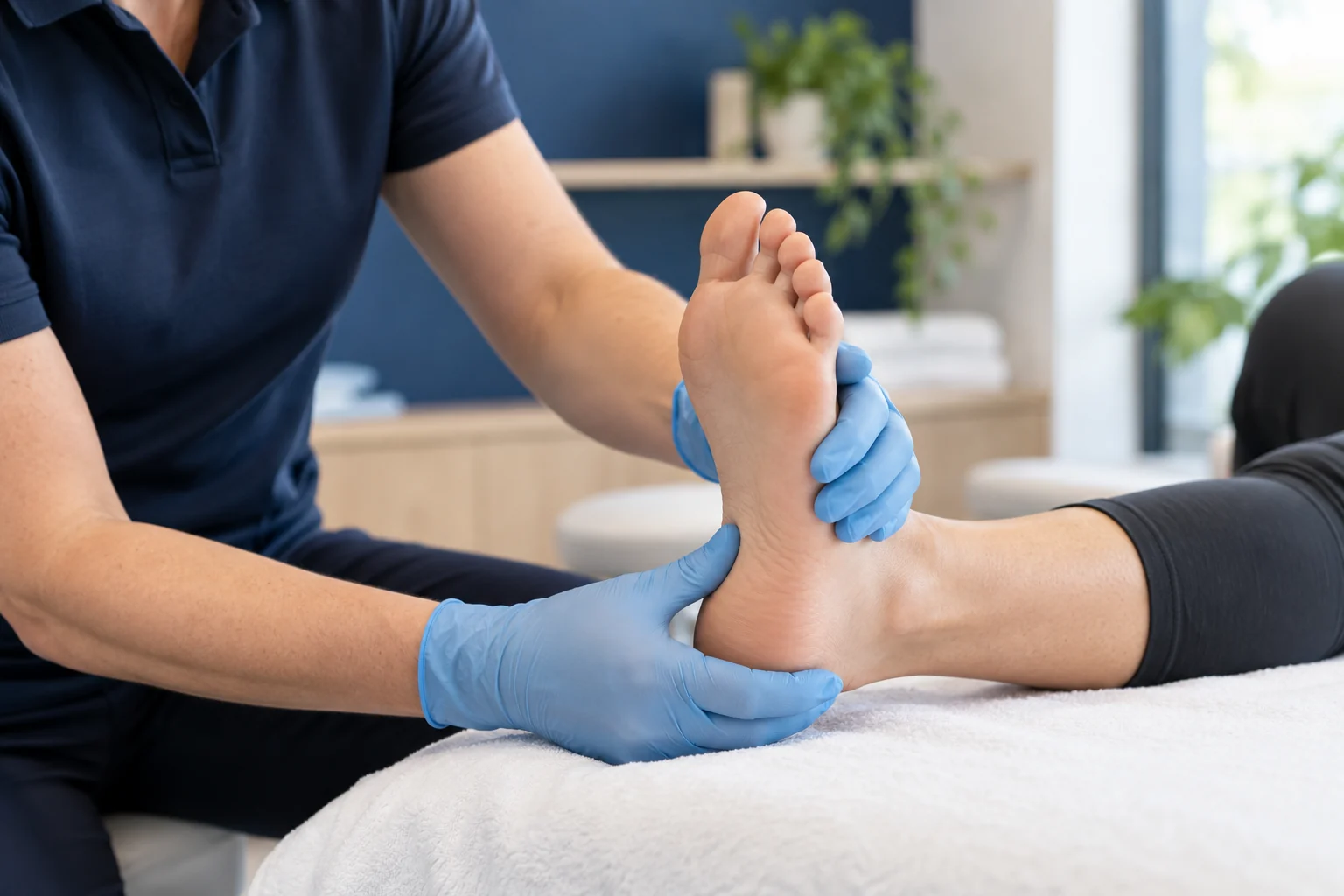
Where does it hurt?
Arch pain
Ache or burning along the inside of the foot, often worse after standing or at the end of the day. Commonly involves the plantar fascia, the small foot muscles or the tibialis posterior tendon.
Ball of the foot
Pain under the forefoot, sometimes with callus or a feeling of walking on a pebble. Can be joint overload, a nerve (Morton’s neuroma) or a stress reaction in a long bone.
Heel pain
Worst with the first steps in the morning, or at the back of the heel. See our dedicated heel pain page for the detail.
Big toe joint
Stiffness or pain pushing off, with or without a visible bump. Covered on our bunions page.
Top of the foot
Aching across the midfoot, sometimes with lacing pressure. Joint irritation, tendon pain or — in active people after a load increase — a stress reaction worth taking seriously.
Toes, nails and skin
Ingrown nails, corns, callus and warts are their own thing and often resolved quickly. See routine podiatry.
Treating how the foot moves, not only how it is shaped
A lot of foot care focuses on supporting the foot in the position it is in. That has its place, and for some feet it is the right answer. But it is not the only option, and it is not where we start for everyone.
Foot mobilisation therapy works on the joints themselves — restoring movement where it has been lost, then strengthening so the foot can hold it. Where stiffness is part of why a structure is overloaded, that addresses the cause directly.
Our physiotherapist delivers this approach, and our podiatrists provide orthotic therapy where that is the better fit. You will get an honest recommendation about which suits your foot — and plenty of people end up with a combination.
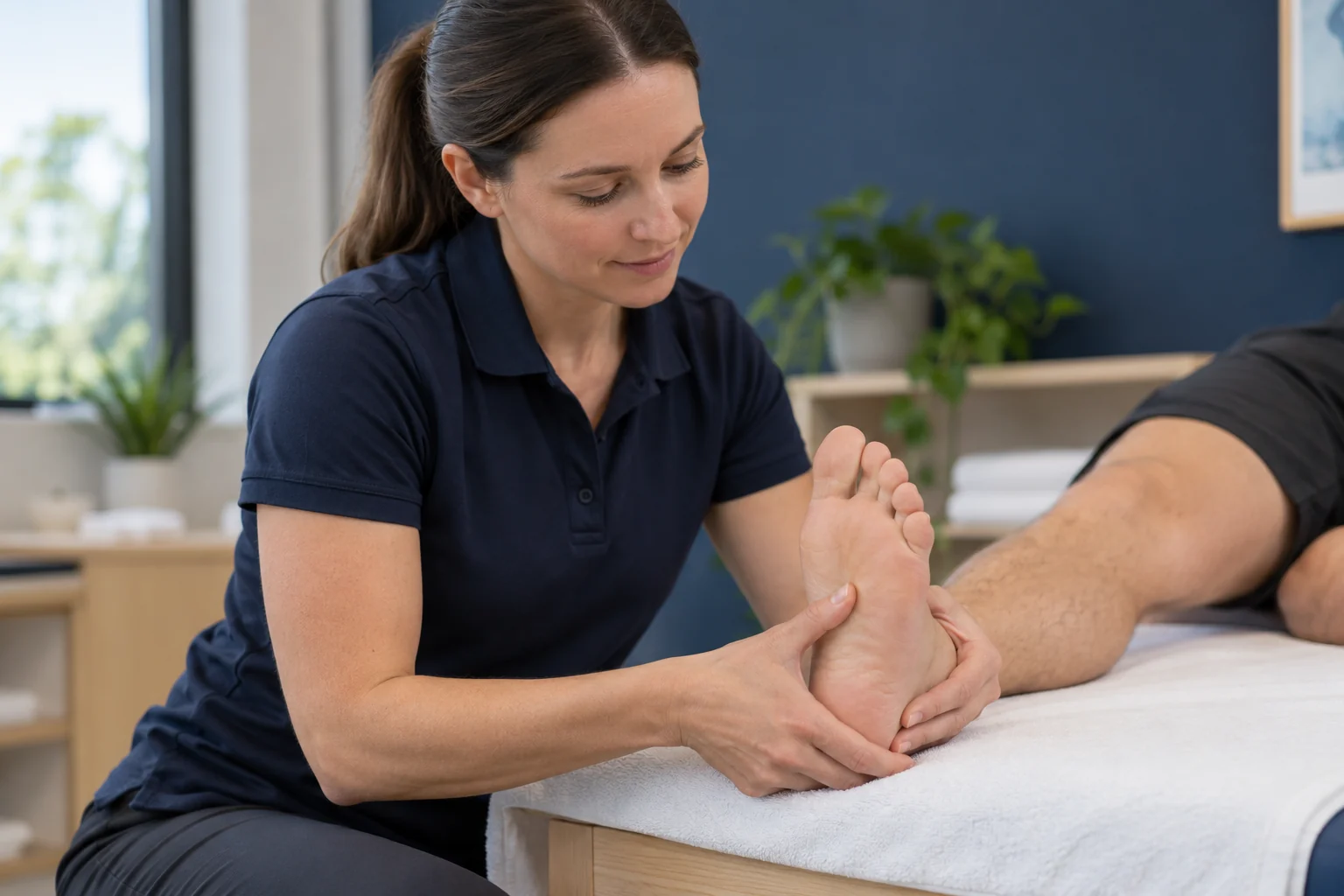
How we treat foot pain
Most plans combine two or three of these. What goes in yours depends entirely on the assessment.
Joint mobilisation and hands-on treatment
Restoring movement where joints in the foot and ankle have stiffened, so load is shared across the foot rather than concentrated on one structure.
Strengthening and movement retraining
The foot has its own muscles and they can be trained. A short, specific programme, progressed properly, is often what turns a short-term improvement into a lasting one.
Footwear assessment
Bring what you actually wear — work shoes, trainers, the pair you have had for six years. Fit, depth, sole stiffness and wear pattern all tell us something, and changes here are often the cheapest win available.
Orthotic therapy where appropriate
Where redistributing load is the right approach, an orthotic device does that well. We will explain why we are recommending it, what it costs and what else could be tried first.
Skin and nail treatment
Callus, corns and nail problems can be the whole reason a foot hurts, and are usually treated the same day. They also tend to recur unless the pressure causing them is addressed, so we look at both.
Load management, imaging and referral
Adjusting how much the foot is being asked to do while it settles. Where a stress reaction or something less common is suspected, we will arrange imaging or refer you on and write to your GP.
What happens at your first appointment
Your story
Where it hurts, when it started, what makes it worse, and what you need to get back to.
Assessment
Joint movement, strength, skin and nails, your footwear, and how you walk — plus the ankle, knee and hip.
Explanation
What we think is going on and why that structure is taking the load, in plain English.
Treatment and plan
First treatment on the day where appropriate, your exercises, and what should change before the review.
Book a foot assessment — appointments are usually available within days.
Foot pain FAQs
Should I see a podiatrist or a physiotherapist?
For most foot pain either is a sensible starting point, and we run both in the same clinic so you are not stuck with the wrong one. Skin, nail and forefoot problems generally sit with the podiatrists; whole-chain mechanics and rehabilitation sit with the physiotherapist. If you are unsure, call reception on 07 5571 7329 and describe it.
Will I be told I need orthotics?
Only if we think they are the right option for your foot, and we will explain what the alternatives are. Many of our patients come specifically because they want to look at mobility and strength work first, and we are set up to do that.
I have flat feet. Is that the problem?
Not necessarily. A low arch is a foot shape, not a diagnosis, and plenty of people with flat feet have no pain at all. What matters is how the foot moves and whether a particular structure is being overloaded — which is what we assess rather than just measuring arch height.
Do I need an x-ray or scan?
Often not. Where a stress fracture, a significant tendon problem or something unusual is suspected, imaging is worth doing and we will arrange it. Otherwise it rarely changes the plan.
Can I still walk and exercise?
Usually yes, with adjustments. Complete rest tends to leave the foot less prepared for the load when you return to it. Your clinician will set out what to keep, what to scale back and for how long.
Do I need a referral?
No. Book directly. Medicare Chronic Condition Management Plans, DVA and NDIS are all accepted — bring your paperwork and we will process it in the clinic. Current fees are on our fees page.
Hip to Toe, Arundel
138 Olsen Avenue, Arundel
Gold Coast, QLD 4214
Near the corner of Central Street, between Harbour Town and the Gold Coast University Hospital.
Phone: 07 5571 7329
Email: reception@hiptotoe.com.au
Getting here
FREE on-site parking in the car park behind the clinic, plus free street parking out the front.
Ramped entrances, a disability parking bay and an accessible bathroom. If you’d like a hand getting in, call ahead and we’ll make sure someone can meet you.
Book your foot assessment
Assessment, explanation and first treatment in the one appointment. No referral needed, health fund rebates on the spot, free parking out the back.
Related: heel pain, ankle pain, foot mobilisation and routine podiatry.