Ankle Pain & Sprain Treatment on the Gold Coast
Rolled it on the weekend, or an ankle that has never been quite right since? Our physiotherapists and podiatrists assess what is injured, what has stiffened and what has weakened — then rebuild it properly.
What to expect
- Acute sprains seen quickly where we can
- No GP referral required
- Return-to-sport planning, not just “rest it”
- Health fund rebates claimed on the spot
- FREE on-site parking behind the clinic
Podiatry and physio together
Both in the one clinic — and we move you across if the other one is the better fit.
No referral needed
Book straight in. Medicare care plans, DVA and NDIS patients welcome.
Health fund rebates on the spot
HICAPS in the clinic — claim as you pay and only settle the gap.
FREE on-site parking
Car park behind the clinic on Olsen Avenue, Arundel, plus free street parking.
The sprain that “got better” is the one that comes back
Ankle sprains are so common that they get treated casually — a few days on the couch, the swelling goes down, back to normal. The pain settling is not the same as the ankle having recovered.
What is often left behind is reduced movement at the ankle, weakness in the muscles that control it, and a drop in balance and position sense. Those are the things that make the next sprain more likely, and a meaningful proportion of people go on to have repeat sprains or ongoing instability.
It is worth getting right the first time, and it is still worth addressing even if the original sprain was years ago.
We assess the ankle itself, the foot below it and the knee and hip above, work out what is missing, and build a progression that takes you back to the thing you actually want to do — whether that is netball, trail walking or just not thinking about kerbs.
Rolled your ankle? Sprains are best assessed early.
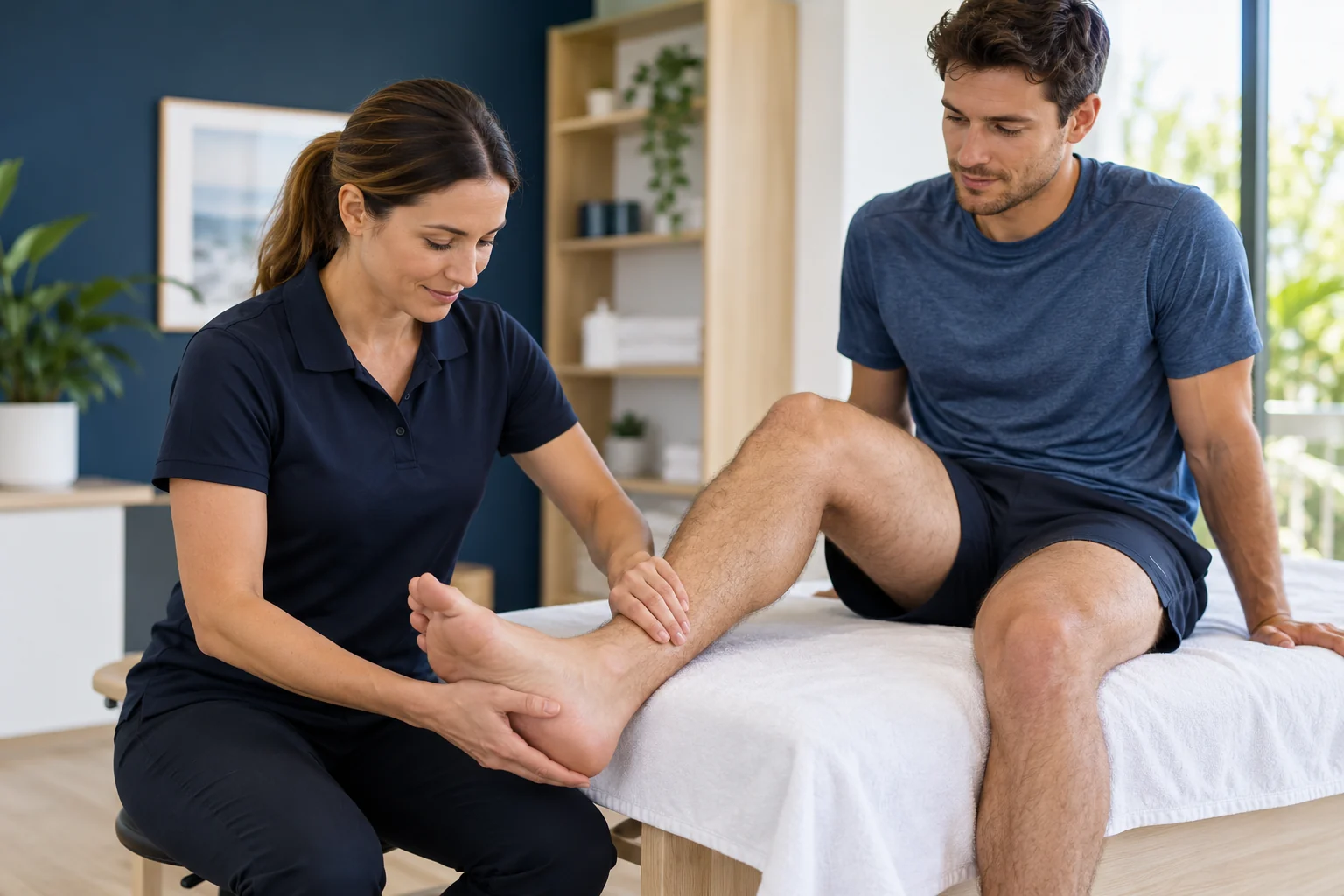
What causes ankle pain?
Lateral ligament sprain
The classic rolled ankle — the foot turns in and the ligaments on the outside are overstretched. Pain, swelling and bruising on the outside of the ankle.
Chronic ankle instability
Repeated giving way, or a persistent lack of confidence on uneven ground, after one or more previous sprains. Responds to balance and strength work.
Achilles tendinopathy
Pain and stiffness at the back of the ankle, worst first thing or after rest, and load-related. Needs graded loading rather than rest.
Tibialis posterior problems
Pain and swelling along the inside of the ankle, sometimes with the arch flattening. Worth picking up early.
Impingement
A pinching block at the front or back of the ankle at the end of range, often after previous injury. Limits squatting, running and going down stairs.
Osteoarthritis
Stiffness and ache, often following an old injury. Strength, movement work and footwear changes can all contribute to managing it.
The four stages of getting an ankle back
Skipping straight from “it does not hurt” to “back to sport” is where most repeat sprains come from.
Settle it
Protect, manage swelling and start gentle movement early. Prolonged complete rest generally slows things down rather than helping.
Restore movement
Getting the ankle bending properly again, particularly the ability to bring the knee forward over the foot. This is commonly where recovery stalls.
Rebuild strength and balance
Calf and foot strength, plus balance and position sense, which take a knock after a sprain and do not simply come back on their own.
Return to your sport
Hopping, cutting, landing and change of direction, progressed until the ankle can do what your sport will ask of it.
How we treat ankle pain
Assessment and diagnosis
First, what is actually injured. Clinical tests help determine whether an x-ray is warranted to rule out a fracture, and we can arrange that where it is. Not every sore ankle needs imaging.
Hands-on treatment and joint mobilisation
Restoring ankle and foot joint movement, which is frequently the limiting factor after a sprain and a common reason an ankle still feels “tight” months later. See foot mobilisation.
Progressive strength and balance work
The core of ankle rehabilitation, and the part with the best evidence for reducing the chance of another sprain. Short, specific, and progressed as you improve.
Taping and bracing
Useful during the return to sport and for higher-risk activities. We will show you how to tape it yourself rather than making you come in for it.
Footwear and orthotic therapy where appropriate
How the foot sits under the ankle affects the load going through it. Where this is relevant we will discuss footwear and, if warranted, orthotic therapy.
Return-to-sport planning
Clear criteria for what you need to be able to do before going back, rather than a date on a calendar. See sports injuries.
Book an ankle assessment — acute injuries are prioritised where we can.
Ankle pain FAQs
Is it broken or sprained?
You cannot reliably tell from swelling or bruising alone — a bad sprain can look dramatic and a small fracture can look mild. There are well-validated clinical rules that help determine who needs an x-ray, and we apply those at the assessment. If you cannot bear weight at all, have obvious deformity or severe bone tenderness, go to a GP or emergency department rather than waiting for an appointment.
How long until I am back playing?
It depends on the grade of the injury and what your sport demands. A mild sprain may be a couple of weeks; a more significant one considerably longer. We set return criteria based on what the ankle can do rather than guessing a date, and we will give you an honest estimate at the assessment.
Should I rest it completely?
Generally no, beyond the first day or two. Gentle early movement and loading within comfort is usually better than extended rest, which tends to leave the ankle stiff and weak. Your clinician will tell you what is reasonable for your injury.
My ankle keeps giving way. Is that fixable?
It is worth assessing. Recurrent instability usually involves a combination of lost movement, weakness and reduced balance, and all three respond to targeted work — even years after the original sprain. Where instability persists despite good rehabilitation, a specialist opinion may be appropriate and we will arrange it.
Do ankle braces weaken the ankle?
Current evidence does not support that concern. Braces and taping are reasonable for higher-risk activity, particularly during the return to sport — but they work best alongside strength and balance work, not instead of it.
Do I need a referral?
No. Book directly. Medicare Chronic Condition Management Plans, DVA and NDIS are all accepted. Current fees are on our fees page.
Hip to Toe, Arundel
138 Olsen Avenue, Arundel
Gold Coast, QLD 4214
Near the corner of Central Street, between Harbour Town and the Gold Coast University Hospital.
Phone: 07 5571 7329
Email: reception@hiptotoe.com.au
Getting here
FREE on-site parking in the car park behind the clinic, plus free street parking out the front.
Ramped entrances, a disability parking bay and an accessible bathroom. If you’d like a hand getting in, call ahead and we’ll make sure someone can meet you.
Book your ankle assessment
Assessment, explanation and first treatment in the one appointment. No referral needed, health fund rebates on the spot, free parking out the back.
Related: heel pain, foot pain, sports injuries and physiotherapy.