Physiotherapy on the Gold Coast
Back, neck, shoulder, sports injuries and post-surgical rehabilitation — assessed properly, treated hands-on, and backed by a plan that gets you back to what you were doing.
What to expect
- A thorough assessment before any treatment
- No GP referral required
- Hands-on treatment plus exercises to take home
- Health fund rebates claimed on the spot
- FREE on-site parking behind the clinic
Podiatry and physio together
Both in the one clinic — and we move you across if the other one is the better fit.
No referral needed
Book straight in. Medicare care plans, DVA and NDIS patients welcome.
Health fund rebates on the spot
HICAPS in the clinic — claim as you pay and only settle the gap.
FREE on-site parking
Car park behind the clinic on Olsen Avenue, Arundel, plus free street parking.
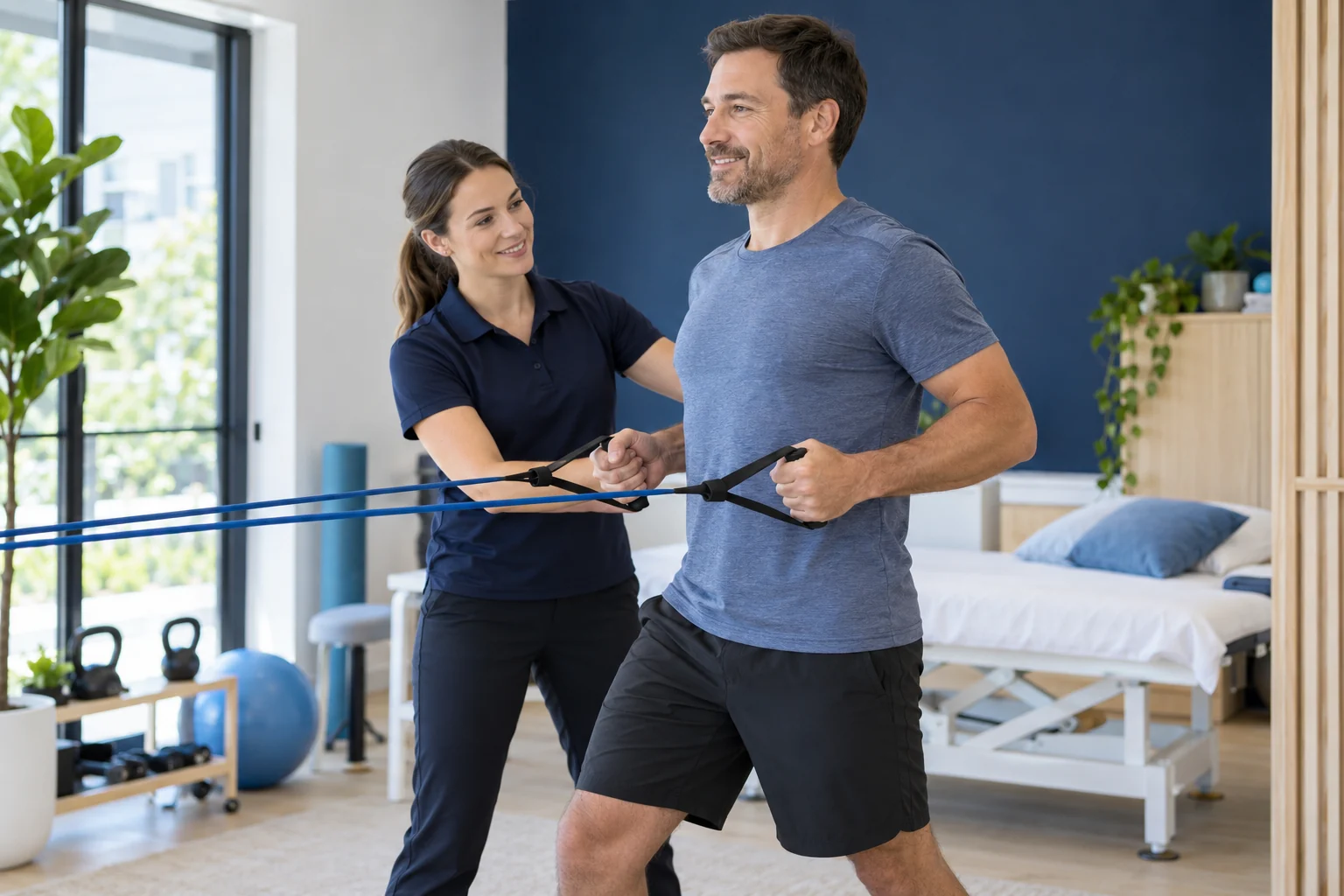
Find what’s driving it, then treat that
Our physiotherapists assess and treat a wide range of musculoskeletal conditions, injuries and movement problems — back and neck pain, sports injuries, post-surgical rehabilitation, and the aches that build up slowly and quietly change what you’re willing to do.
Treatment combines hands-on techniques with exercise prescription, movement retraining and plain-English education, and it’s built around your assessment findings rather than a standard protocol.
What’s different here is the clinic itself: physiotherapists and podiatrists under one roof. Knee pain can come from the foot, heel pain can come from the hip, and having both disciplines in one building means the whole chain gets assessed the first time.
Our physiotherapists have also trained in structural treatment — mobilisation, manipulation and exercise — which is why they work comfortably from the lower back right down to the foot. You can book directly, with no referral.
Hands-on treatment, plus the work that makes it hold
Which of these you get, and in what proportion, depends entirely on what the assessment finds.
Manual therapy
Hands-on techniques to improve joint mobility and soft tissue flexibility — joint mobilisation, soft tissue work and stretching. Dry needling is also available where it’s clinically appropriate and agreed with you.
Exercise and loading
A progressive program targeting the strength, control and load tolerance your assessment showed were lacking. This is the part that stops the problem returning once the hands-on work has settled it.
Movement retraining
Changing how you load, lift, run or sit where that’s contributing — including footwear and foot mechanics, which is where having podiatrists in the same clinic earns its keep.
No referral needed. Book an assessment online in about a minute.
Common presentations
Assessment and treatment are always tailored to you. The notes below are a general guide — your own plan is built after we’ve assessed you.
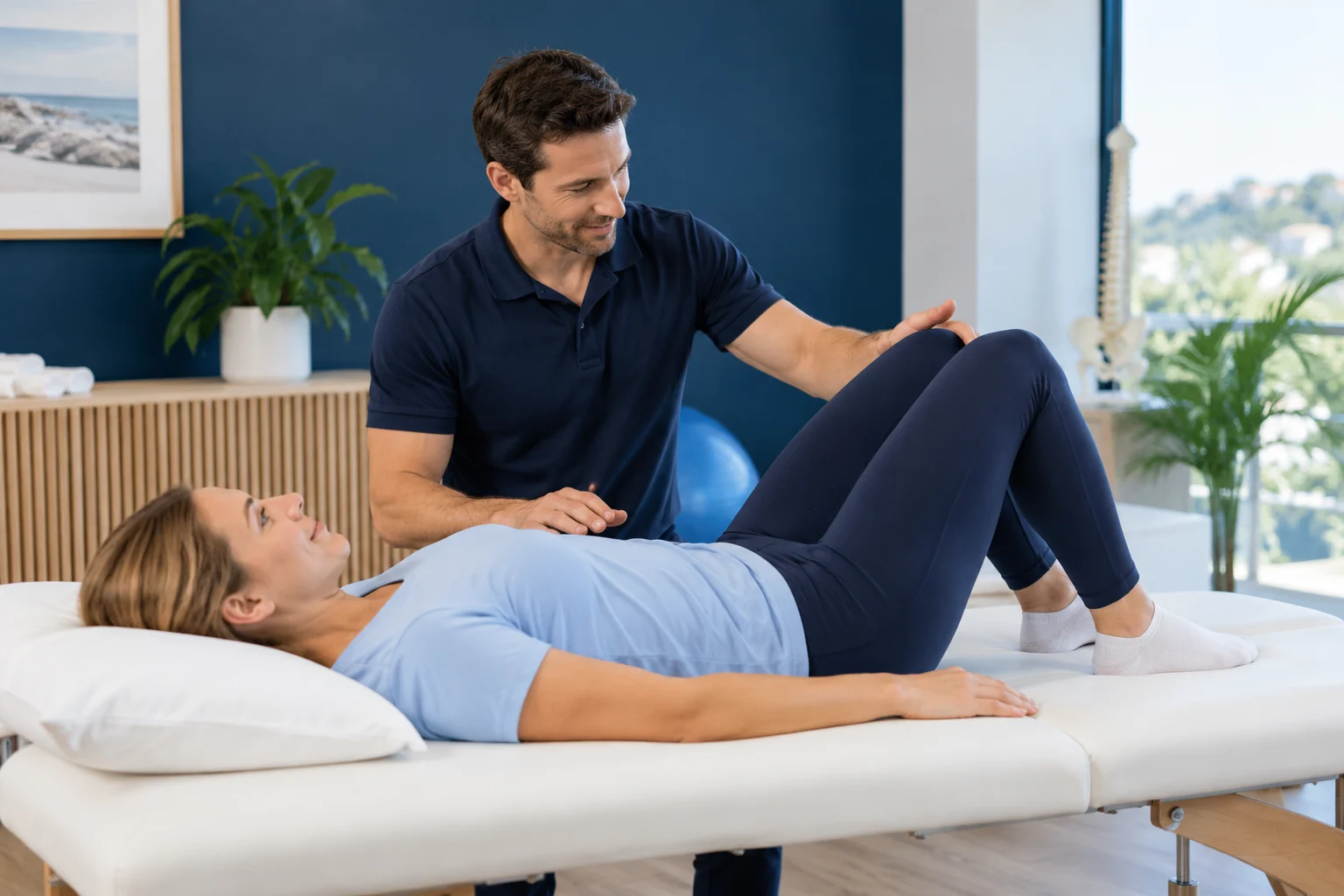
Back pain and sciatica
One of the most common reasons people book in. Back pain can come from joint stiffness, muscle weakness, overuse, injury or altered movement patterns, and may show up as muscle ache either side of the spine, stiffness, spasm, or nerve symptoms running into the leg.
Sciatica usually involves irritation of the sciatic nerve in the lower spine. Rather than chasing the spasm, we assess what’s causing the muscles to behave that way, then treat with manual therapy, exercise and movement retraining. More on our sciatica page.
Neck pain and headaches
The neck supports the weight of the head through a large range of movement, so sustained postures, desk and driving work, training and old injuries all contribute. Symptoms range from tight, tender muscles and stiffness through to headaches that sit at the base of the skull and spread forwards, and occasionally nerve symptoms into the arm.
Treatment usually combines manual therapy and soft tissue work with exercises for the neck and shoulder blade, plus practical changes to how you sit and work.

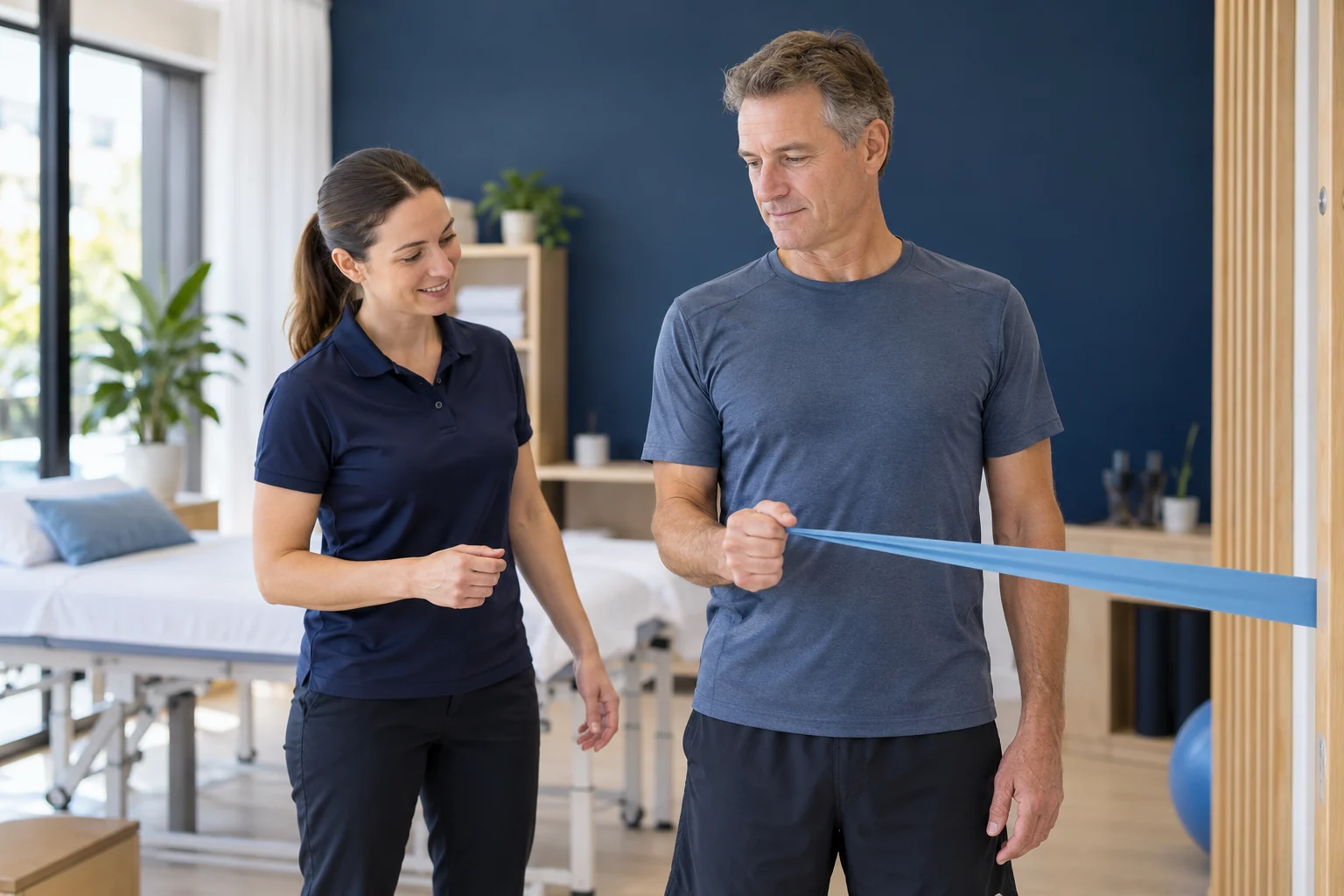
Shoulder and rotator cuff
Rotator cuff irritation from gym work or overhead work, bursitis, AC joint injuries, instability and osteoarthritic shoulders. Typical signs are an ache at the front or side of the shoulder, pain lifting the arm through a particular arc, and pain lying on that side at night.
For most rotator cuff-related pain a structured, progressive exercise program is the recommended first step, with hands-on treatment to settle symptoms along the way.
Sports injuries
Ankle sprains, calf and hamstring strains, Achilles and shin pain, runner’s knee and the overuse problems that follow a jump in training. Rehabilitation is criteria-based: each stage has to hold up before the next one starts. See sports injury physiotherapy.
Post-surgical rehabilitation
Rehabilitation after orthopaedic surgery, working to your surgeon’s protocol and progressing strength and function back safely towards work, sport and everyday activity.
Heel, knee and hip pain
Frequently influenced by what the foot is doing. These are assessed across both disciplines here, and treatment may include hands-on work on the foot itself — see foot mobilisation — alongside strength work for the hip and thigh.
Women’s and men’s health
Pelvic floor, pregnancy and postnatal care with our women’s health physiotherapist, and the broader musculoskeletal problems men tend to work around for months. See women’s health and men’s health.
What happens when you book
Assessment
Your history, what aggravates it, and hands-on testing of movement, strength and the structures involved — including how your feet and hips load.
Find the driver
Clinical testing to work out what’s actually contributing, so treatment targets the cause rather than chasing the symptom.
Treat and load
Hands-on treatment where it helps, plus a progressive program. You leave the first appointment with something to do.
Progress and review
We reassess as you go, progress you back to work, sport or training, and tell you when you no longer need us.
Get it assessed properly, then get a plan. Book online.
Physiotherapy FAQs
Do I need a GP referral?
No. You can book directly any time. If your GP has given you a Chronic Condition Management Plan, bring it along — it allows up to five subsidised allied health appointments per calendar year and we process the rebate in-clinic. We don’t bulk bill, so standard fees apply on the day.
What should I wear and bring?
Something you can move in, and that allows the area to be seen — shorts for a knee or hip, a singlet or t-shirt for a shoulder. Bring the shoes you train or work in, plus any scans or reports you already have.
Will I get dry needling?
Only where it’s clinically appropriate and you’re comfortable with it. Your physiotherapist will explain what it involves and why it might help before anything happens, and it’s never a requirement of treatment.
How many appointments will I need?
It depends on what’s going on and how long it’s been there. Long-standing problems generally take longer than recent ones. You’ll get an honest estimate after the first assessment, and we reassess as you go rather than booking you in indefinitely.
Do you treat work injuries and WorkCover?
Yes. Bring your claim details to the first appointment and reception will let you know what’s needed, or call us beforehand on 07 5571 7329 to check how it works.
Can I claim on my private health fund?
Yes, on the spot, according to your provider and policy. Current fees are on our fees page, and reception can check your rebate if you call with your card handy.
Hip to Toe, Arundel
138 Olsen Avenue, Arundel
Gold Coast, QLD 4214
Near the corner of Central Street, between Harbour Town and the Gold Coast University Hospital.
Phone: 07 5571 7329
Email: reception@hiptotoe.com.au
Getting here
FREE on-site parking in the car park behind the clinic, plus free street parking out the front.
Ramped entrances, a disability parking bay and an accessible bathroom. If you’d like a hand getting in, call ahead and we’ll make sure someone can meet you.
Book your physiotherapy assessment
No referral needed, early and after-hours appointments, and free parking out the back.