Heel Pain Treatment on the Gold Coast
Sharp pain in the heel first thing in the morning? Heel pain is one of the most common things we see. Our podiatrists and physiotherapists assess what is actually loading the heel — then treat that, not just the sore spot.
What to expect
- Assessment and first treatment in the same appointment
- No GP referral required
- Podiatry, physiotherapy and foot mobilisation under one roof
- Health fund rebates claimed on the spot
- FREE on-site parking behind the clinic
Podiatry and physio together
Both in the one clinic — and we move you across if the other one is the better fit.
No referral needed
Book straight in. Medicare care plans, DVA and NDIS patients welcome.
Health fund rebates on the spot
HICAPS in the clinic — claim as you pay and only settle the gap.
FREE on-site parking
Car park behind the clinic on Olsen Avenue, Arundel, plus free street parking.
Heel pain has a cause — and it is often not just the heel
Most heel pain comes down to tissue being loaded more than it can currently tolerate. The plantar fascia, the heel fat pad, the Achilles tendon and the small muscles of the foot all take load every step you take — thousands of times a day.
What changes that load is usually something else: how stiff or mobile your foot joints are, how your ankle and hip move, a jump in training, a change of shoes, time on hard floors, or a change in weight.
That is why two people with the same diagnosis often need quite different treatment. Rolling a ball under the arch helps some people and does very little for others.
At Hip to Toe we assess the foot, ankle, knee and hip together, look at how you walk, and work out what is likely to be driving your symptoms before recommending anything. Where it is appropriate, we can begin hands-on treatment at the first visit.
Heel pain is usually easier to settle early. Get it assessed this week.
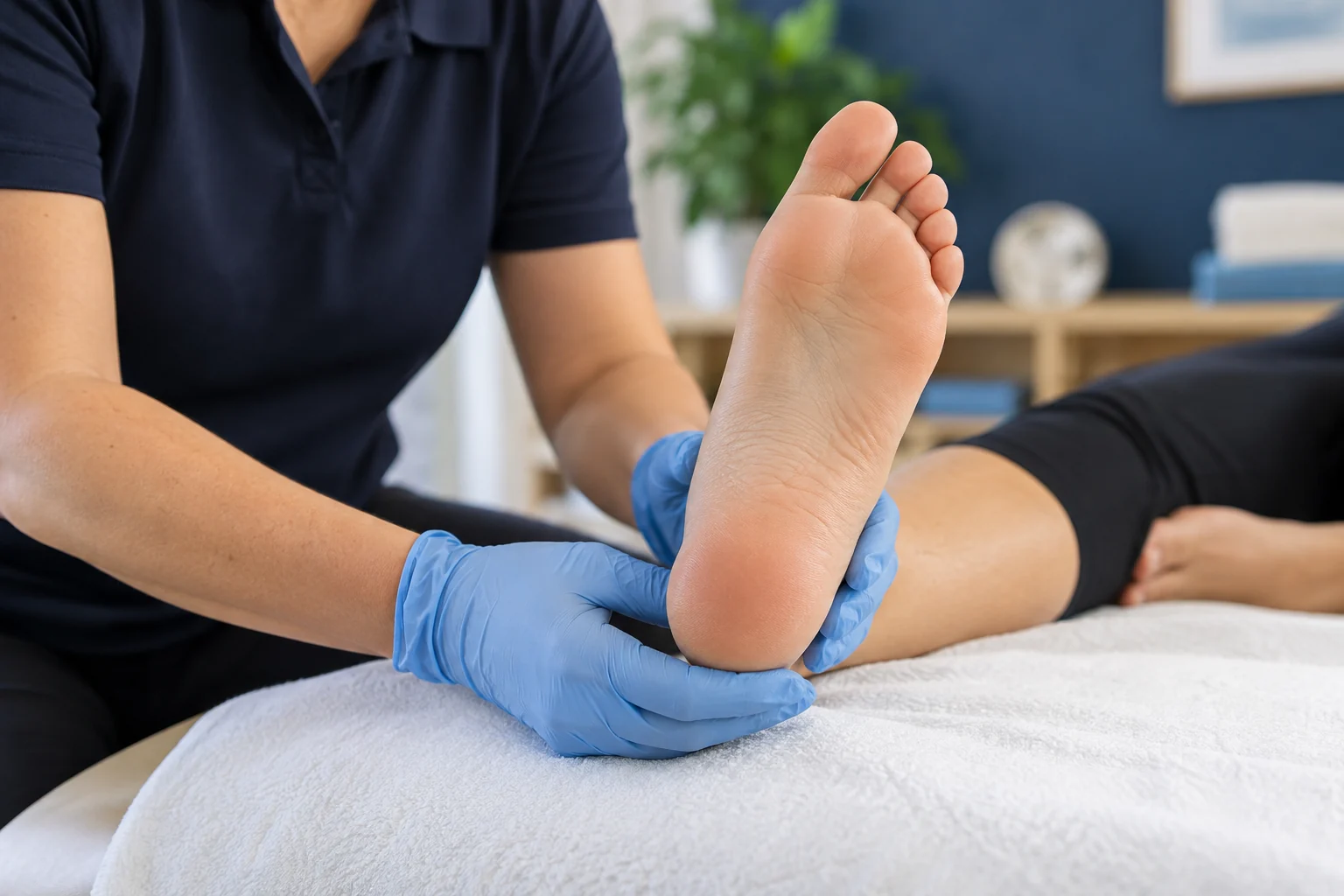
What causes heel pain?
Plantar fasciitis
Irritation of the thick band of tissue running from the heel to the forefoot. Classically worst for the first few steps in the morning, eases as you warm up, then returns after sitting.
Heel spurs
A bony growth at the heel, often found on x-ray. Spurs are common in people with no pain at all, so the spur itself is rarely the whole story — the surrounding tissue usually tells us more.
Achilles tendinopathy
Pain at the back of the heel or up into the tendon, typically load-related and stiff after rest. Common alongside a change in running or walking volume.
Fat pad irritation
The cushion under the heel bone can become sensitive, particularly after a lot of time barefoot or on hard surfaces, or with thinning of the pad over time.
Nerve-related pain
Burning, tingling or shooting symptoms can suggest nerve involvement around the heel, or referral from further up the chain, which needs a different approach.
Children’s heel pain
In active kids, heel pain at the growth plate is common and often settles well with the right plan. See children’s podiatry.
Where your heel pain sits matters
How we treat heel pain
Your plan depends on what the assessment finds. Most people get a combination of the below rather than one single thing.
Hands-on treatment and foot mobilisation
Where joint stiffness through the foot and ankle appears to be contributing, gentle mobilisation aims to restore movement so load is shared more evenly across the foot. This is the approach many of our patients come to us specifically for — read more on foot mobilisation.
Exercise and strengthening
Tissue that is sore because it is under-prepared for the load it is taking tends to respond to progressive strengthening. You will get a small number of specific exercises rather than a long list, with a clear idea of how to progress them.
Load and footwear advice
Often the quickest win. What you stand on at work, what you train in, and how quickly you have increased it — small changes here can meaningfully reduce the daily load on an irritated heel.
Orthotic therapy where appropriate
For some feet, redistributing load with an orthotic device is a sensible part of the plan — either short term while things settle, or longer term. We will explain why, what it costs and what the alternatives are so you can decide. See orthotics.
Taping, padding and offloading
Simple, low-cost and reversible. Useful early on to see whether changing the load on a structure changes your symptoms — which also tells us something about the diagnosis.
Imaging and referral
Not everyone needs an x-ray or ultrasound. Where imaging will genuinely change the plan, or where symptoms suggest something less common, we will organise it or refer you on and write to your GP.
What happens at your first appointment
Your story
When it started, what makes it worse, what you have already tried, and what you want to get back to.
Assessment
Hands-on examination of the heel and foot, joint movement, strength and how you walk — plus the ankle, knee and hip.
Explanation
A plain-English account of what we think is going on, how confident we are, and what a realistic timeframe looks like.
Treatment and plan
First treatment on the day where appropriate, your exercises, and a clear plan for what happens between now and the review.
Book a heel pain assessment — appointments are usually available within days.
Heel pain FAQs
How long does heel pain take to settle?
It varies a great deal depending on what is involved, how long it has been there and how much load the heel takes each day. Some people improve noticeably within a few weeks; longstanding plantar fascia problems can take several months. Your clinician will give you an honest estimate for your situation rather than a generic promise, and will tell you what should change first if the plan is working.
Do I need an x-ray or a scan?
Often not. Imaging is useful when it will change what we do — for example where the history suggests a stress fracture, or where the presentation is unusual. Heel spurs in particular turn up on the x-rays of plenty of people with no symptoms at all, so a spur on a report does not necessarily explain your pain.
Will I definitely need orthotics?
No. Orthotic therapy is one option among several and suits some people more than others. Many of our patients are specifically looking to work on foot and joint mobility first, and we are set up to do that. If orthotics are worth considering in your case we will explain why and what the alternatives are.
Should I see a podiatrist or a physiotherapist?
For heel pain either is a reasonable starting point, and we work alongside each other in the same clinic — so if your presentation is better suited to the other discipline, we will say so and arrange it. If you are unsure, call reception on 07 5571 7329 and describe your symptoms; they will book you with the right person.
Do I need a referral?
No. You can book directly. If your GP has given you a Medicare Chronic Condition Management Plan, bring it and we can process the rebate in-clinic. We also see DVA and NDIS patients.
Can I keep running or walking?
Usually we aim to modify rather than stop altogether, because complete rest tends to leave the tissue less prepared when you go back to it. How much you can keep doing depends on your symptoms — your clinician will work that out with you.
Hip to Toe, Arundel
138 Olsen Avenue, Arundel
Gold Coast, QLD 4214
Near the corner of Central Street, between Harbour Town and the Gold Coast University Hospital.
Phone: 07 5571 7329
Email: reception@hiptotoe.com.au
Getting here
FREE on-site parking in the car park behind the clinic, plus free street parking out the front.
Ramped entrances, a disability parking bay and an accessible bathroom. If you’d like a hand getting in, call ahead and we’ll make sure someone can meet you.
Book your heel pain assessment
Assessment, explanation and first treatment in the one appointment. No referral needed, health fund rebates on the spot, free parking out the back.
Related: foot pain, ankle pain, foot mobilisation and orthotics.